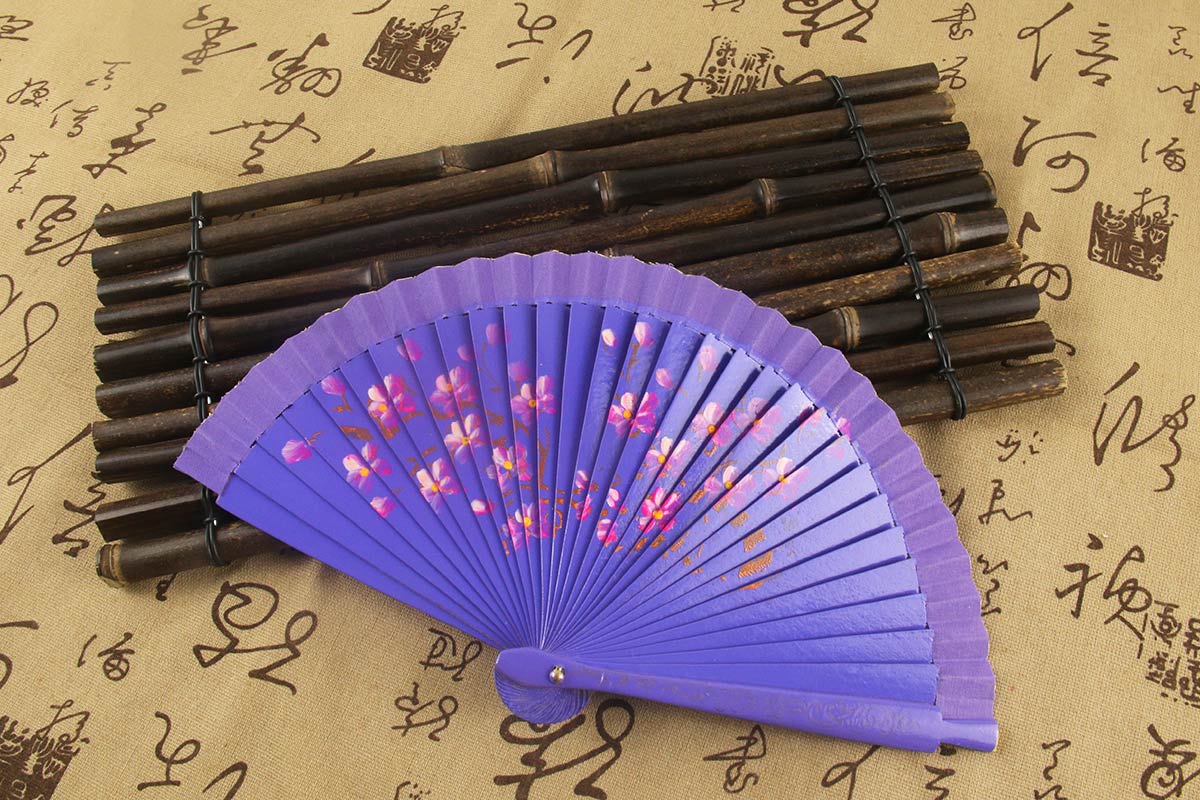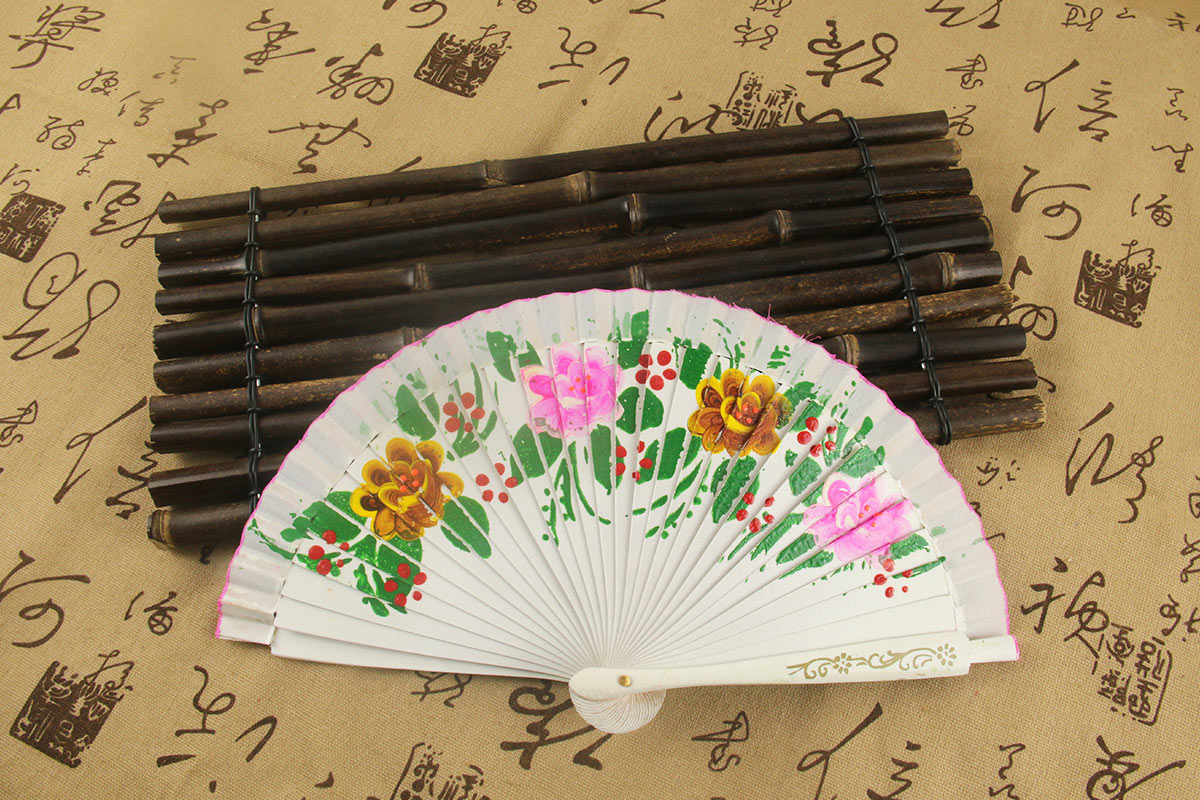

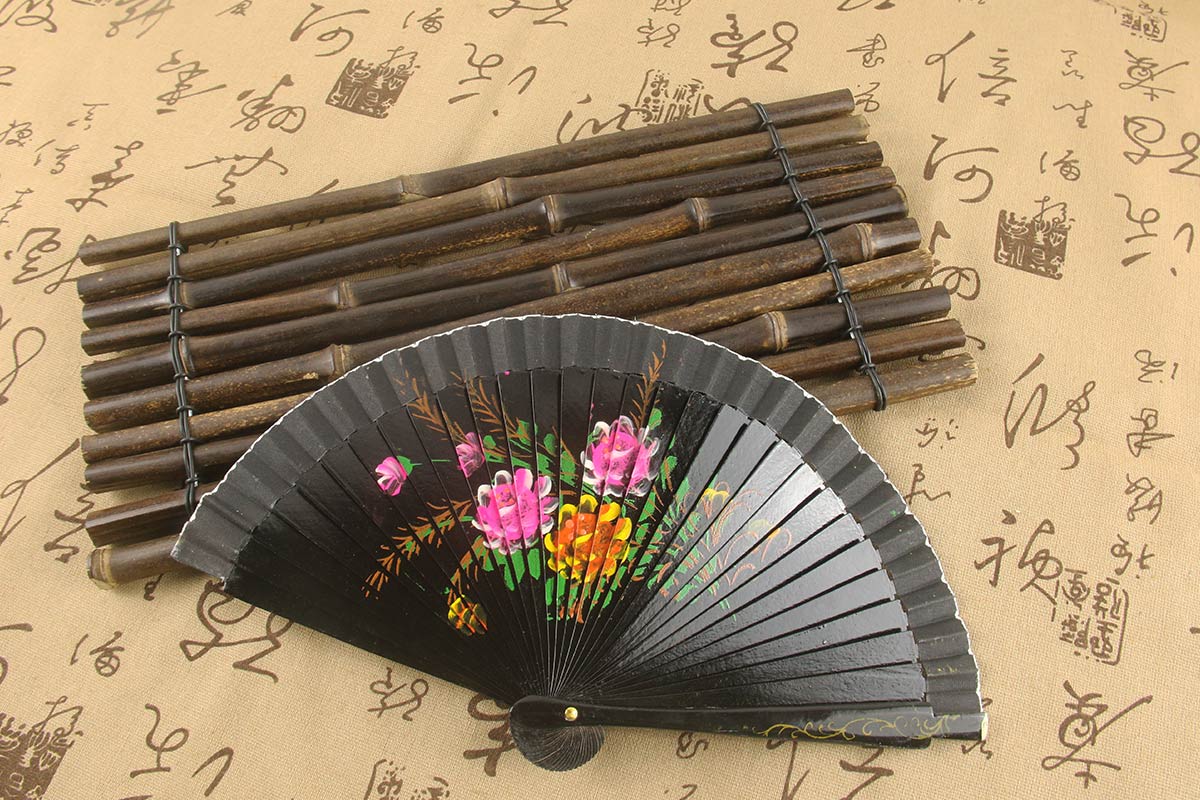
CRAFTSHISTORY’s black hand fan is created based on traditional handcraft techniques while addressing the needs of contemporary use. Compared with standardized mass-produced fans, this black hand fan places greater emphasis on process control, structural stability, and long-term usability. The overall design avoids excessive decoration, instead relying on structure, proportion, and material quality to form a clean and consistent visual presence.
Traditional Structure as the Design Foundation
In terms of overall construction, CRAFTSHISTORY’s black hand fan follows the classic folding fan structure. This structure has been proven over time to support frequent opening and closing, achieving a practical balance between surface area, stability, and portability, making it suitable for everyday use.
Building on this traditional form, the brand makes subtle adjustments to details such as the number of ribs, the opening angle, and the folded thickness. These refinements allow the black hand fan to feel more comfortable in use while maintaining ease of carrying, storage, and long-term consistency.

Material Selection and Control
Each black hand fan begins with careful material selection and control, reflected in the following aspects:
- Strength considerations: Materials are chosen for structural stability, ensuring they can withstand repeated opening and closing during daily use without deformation or loosening over time.
- Weight balance: While maintaining sufficient strength, material weight is controlled to keep the fan balanced in hand and comfortable during extended use.
- Surface feel: Basic surface finishing is applied to reduce roughness and irregular edges, allowing the black hand fan to feel natural and stable when handled.
- Consistency management: Within the same product, attention is paid to maintaining consistency in texture, thickness, and tone to ensure a uniform appearance and user experience.
- Use of black color: Black is not applied as decoration but to reduce visual distraction, highlight structural proportions, and improve the fan’s adaptability across different outfits and usage settings.
Hand Processing of the Fan Ribs
During production, the fan ribs go through multiple manual processes, including:
- Cutting: Craftspeople cut raw materials into segments according to the structural requirements of the black hand fan, controlling dimensional tolerances so all ribs align accurately during assembly.
- Trimming: After cutting, rib edges are manually refined, especially around joints and corners, reducing friction during opening and closing while improving grip stability.
- Multiple sanding stages: Through repeated sanding, thickness distribution and curvature are gradually refined so the ribs open evenly and fold in a natural, orderly manner.
Throughout this process, each rib is individually checked for dimensional consistency, surface feel, and structural stability. These manual steps directly affect the black hand fan’s smoothness, durability, and long-term performance, making them difficult to replace with standardized mechanical processes.

Fan Leaf Production and Assembly
The fan leaf is also completed through hand assembly and includes the following steps:
- Size cutting: Based on the number, length, and opening angle of the ribs, the fan leaf material is precisely cut to ensure even coverage when fully opened, while avoiding excess material that could affect folding.
- Positioning and fixing: During assembly, the fan leaf is fixed to each rib in sequence, ensuring accurate alignment and preventing uneven expansion.
- Tension adjustment: Through repeated opening and closing tests, tension between the leaf and ribs is adjusted to distribute force evenly and reduce the risk of loosening or deformation over time.
- Overall assembly check: After fixing and adjustment, the overall coordination between leaf and ribs is reviewed to ensure the black hand fan opens smoothly and folds into a compact, orderly form.
Final Inspection and Completion
Once assembly is complete, each CRAFTSHISTORY black hand fan undergoes a thorough inspection process, although it is basic. This includes testing the smoothness of opening and closing to ensure consistent movement, checking the firmness of connection points to confirm that all components are securely fixed, and reviewing overall structural stability during handling. Attention is also given to alignment and balance, allowing the fan to open evenly and fold without resistance. Rather than adding decorative finishes at this stage, the inspection focuses on verifying that the black hand fan meets practical standards for everyday use and remains consistent with the original design intent.
Conclusion
How Is CRAFTSHISTORY’s Black Hand Fan Handcrafted? The answer lies in each stage of the production process. From the selection of a traditional folding structure and careful material control to manual processing and final inspection, every step contributes to the overall stability and usability of the product. Rather than focusing on decorative elements, CRAFTSHISTORY’s black hand fan is crafted through a stable and repeatable process that prioritizes structure, balance, and long-term durability. If you would like to learn more about specific product details, craftsmanship methods, or usage recommendations, feel free to contact us for further information.